how-to · 11 min read
Gutter Fell Off Your House? How to Reattach It Safely
By Bobby ·
Last Updated: November 19, 2026
Quick Summary
A gutter fell off because failed hangers, rotted fascia, or too much weight pulled it down. Secure any hanging section first, then check the fascia for rot before rehanging with hidden hangers screwed into solid wood every 24 inches.
- Tie back any hanging gutter section with rope or strap so it cannot fall on a person or car.
- Probe the fascia with a screwdriver; soft, crumbly wood means rot and no new hanger will hold.
- Hidden hangers with long screws generally hold better than old spike-and-ferrule pairs.
- Space hangers every 24 inches, and closer in areas that see ice dams.
- Gutter needs a slope of roughly a quarter inch per ten feet toward the downspout.
Table of Contents
- Why Your Gutter Fell Off the House
- Safety First: Working at the Roof Edge
- Diagnosing the Damage Before You Rehang
- Choosing Gutter Hangers That Hold
- Step-by-Step: Reattaching the Gutter Section
- Choosing Gutter Hangers That Hold
- When to Call a Gutter Professional
- Frequently Asked Questions
Why Your Gutter Fell Off the House
A gutter fell off house structures most often because of failed fasteners, rotted fascia, or too much weight. At Realistic Exterior, we have worked on gutters since 2009, and the cause is rarely a mystery once you look closely.
The gutter itself is usually the victim, not the culprit. Something behind it gave way first.
Failed Hangers, Rot, and Overload
Three forces pull a gutter run down:
- Failed hangers: Spikes and ferrules work loose over time. Hidden hangers crack or pull free.
- Rotted fascia: Water gets behind the gutter, and the wood softens until screws have nothing to bite.
- Overload: Leaves, standing water, and heavy snowfall all add weight. Ice dams push from above.
One detail most guides miss: a gutter that sags before it drops is telling you the fascia is already failing. Catch that sag early and you avoid the fall.
Safety First: Working at the Roof Edge
A gutter that has fallen or pulled loose is a hazard before it is a repair job. Deal with the immediate risk first, then set up for the work.
Securing the Loose Gutter and Sharp Edges
A detached gutter section can swing, drop, or catch on a downspout. If any part is hanging free, tie it back to the fascia with rope or strap so it cannot fall on a person, a door, or a parked car.
Watch out: a gutter full of standing water can weigh far more than the hangers were rated for, so drain it before you put a ladder against the run.
Temporary Protection While You Arrange the Repair
While the gutter is off, runoff from the roof lands directly at the foundation. Set a downspout extension or a splash block under the open roof edge to move water away from the house. This is temporary protection, not a repair; it buys time until the section is rehung.
Ladder Setup and Fall Prevention
Ladder work causes more injuries than any other part of gutter repair. Set the ladder on firm, level ground and extend it three feet above the roof edge. Ask someone to hold the base. Keep your belt buckle between the rails, and never lean out to reach a section; move the ladder instead.
When the Job Is Too High for DIY
If the drop is more than one story, the ground is uneven, or the gutter has torn loose at multiple points, stop and call a professional.
Diagnosing the Damage Before You Rehang
Diagnosis is the step that decides whether you repair or replace. First, look at the gutter line from the ground. Note where the run has pulled away, sagged, or separated at a seam.
Then check the roof edge above it. Our roof problems explained page covers the common failures that show up at the same edge.
Inspecting the Fascia Board and Fasteners
Probe the fascia with a screwdriver. Soft, crumbly wood means rot, and no new hanger will hold there. Pull one old fastener out and look at it.
Check the back of the gutter too. If the aluminum is bent or torn at the hanger holes, that section needs replacing, not just rehanging.
Choosing Gutter Hangers That Hold
Hidden hangers with long screws generally hold better than old spike-and-ferrule pairs. A hidden hanger brackets the gutter inside the trough and drives a screw deep into solid fascia or rafter tails. That spreads the load instead of concentrating it at one hole.
Match the hanger to the job:
| Hanger Type | Best For | Watch Out For |
|---|---|---|
| Hidden hanger with screw | Most aluminum gutter runs | Needs solid fascia to bite |
| Spike and ferrule | Quick fixes on older homes | Works loose again over time |
| Strap hanger | Heavy snow load areas | Requires roof access to install |
| Bracket with sealant | Seam repairs | Sealant fails before the metal does |
Space hangers every 24 inches, and closer in areas that see ice dams.
Step-by-Step: Reattaching the Gutter Section
Reattaching a gutter section takes about an hour for a short run, but the method changes with the attachment system. Clear the debris out first, then work from one end to the other. The steps below assume you have already confirmed the fascia is solid; if it is soft, fix the wood first.
Spike-and-Ferrule Systems
Spike-and-ferrule gutters hang on long aluminum spikes driven through the trough into the fascia, with a ferrule sleeve holding the gutter's shape. Once a spike pulls out, the hole in the wood is usually enlarged and will not hold a new spike at the same spot.
- Pry out the old spike and ferrule with a flat bar, working gently so you do not bend the gutter face.
- Fill the old hole with a hardwood dowel coated in exterior wood glue, or drill out and plug it, so the new fastener has solid material to bite.
- If the gutter face is distorted at the hole, straighten it with a block and mallet before reinstalling.
- Drive a new spike and ferrule, or upgrade to a screw-in hanger, offset at least an inch from the old hole.
- Check the gutter line with a level as you go; spikes set the pitch, so a misdriven spike throws off the whole run.
Watch out: driving a new spike into the old hole is the single most common reason a rehung spike-and-ferrule gutter drops again within a season.
Hidden-Hanger Systems
Hidden hangers screw through the inside back of the trough into the fascia or rafter tails. They are stronger than spikes because the screw bites deep and the bracket spreads the load.
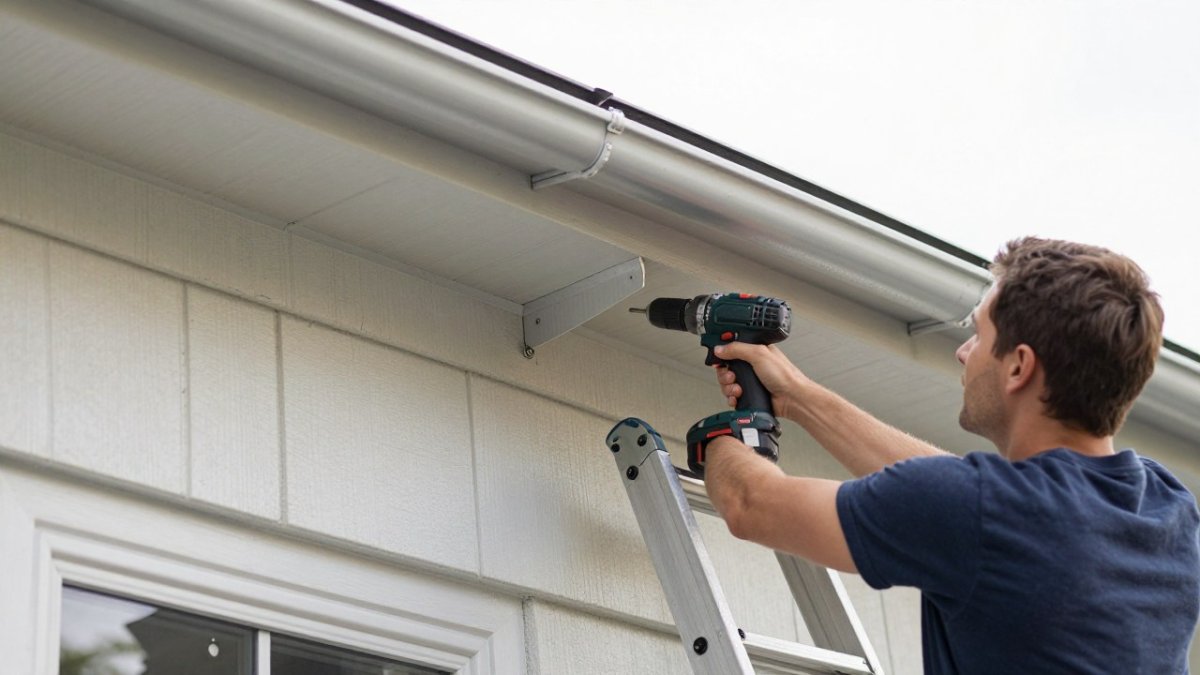
- Remove the old hanger screws with a drill driver; keep the hangers if they are not cracked.
- If the screw holes are stripped, move each hanger up or down an inch and drill pilot holes in solid wood.
- Seat the hanger lip over the gutter's front bead, then drive the screw through the back of the trough into the fascia.
- Space hangers every 24 inches, and closer where the roof sheds heavy snow or ice.
- Tighten until the hanger is snug but not crushing the gutter's back wall.
Bracket-and-Strap Systems
Strap hangers loop over the roof deck or rafter tails and hold the gutter from above. They handle heavy loads well but require roof access, which raises the risk of the job.
- Lift the strap over the roof edge and fasten it to the deck or rafter tail with a lag screw, not a roofing nail.
- Keep the strap vertical; a strap set at an angle pulls the gutter out of line.
- Reuse existing strap holes only if the wood is sound; otherwise shift the strap a few inches.
When Existing Holes Cannot Be Reused
If the fascia is crumbly around every old hole, patching individual spots will not work. Cut out the damaged section and splice in pressure-treated lumber of the same thickness, fastening it into the rafter tails rather than just the sheathing. Prime and paint the cut ends before rehanging. Screwing new hangers into soft, untreated wood is the fastest way to repeat the failure within a season.
Final Check: Slope and Flow
Gutter needs a slight slope toward the downspout, roughly a quarter inch per ten feet. For a full explanation of how sizing, slope and outlet placement work together, see gutter installation Wayne PA homeowners trust. Lay a level along the run and check the gap. If water pools, loosen the hangers and adjust the line before you tighten everything down. Flush the run with a hose and watch the water flow to confirm the pitch before you call the job done.
Choosing Gutter Hangers That Hold
Wait, that heading already appeared. Here is the piece that matters most for prevention: pick hangers for the load your roof actually sees. Tree-heavy lots collect debris fast, and debris plus standing water is the leading cause of overweight gutters.
If you are upgrading the whole system, our seamless gutter and gutter guard service covers options that cut down on debris buildup.
When to Call a Gutter Professional
Call a professional when the fascia is rotted beyond a small patch, when the gutter has torn loose at multiple points, or when the run is above the first story.
Repair scope drives the decision more than price. A single rehung section is a weekend job. A full run with fascia replacement and new hangers is not.
For tree-heavy neighborhoods, our guide on gutter guards for leafy areas explains when guards make sense and when the gutter should be replaced first. If debris is the recurring problem, start with how to clean clogged gutters before you spend on hardware.
A gutter that keeps falling is a sign the whole system needs a look, not just a new screw.
Frequently Asked Questions
Why do gutters pull away from the house?
The usual culprits are failed fasteners, a rotted fascia board, and too much weight. Clogged gutters full of leaves and standing water, ice dams after heavy snowfall, and undersized hangers all add load the system was not built to carry. When the wood behind the gutter softens, screws and spikes lose their grip and the run pulls away from the roof edge.
Can I reattach a gutter that has fallen off?
Yes, if the gutter section is not bent or cracked and the fascia behind it is solid. Remove the old fasteners, inspect the wood, then rehang the run with new hidden hangers or spike-and-ferrule sets spaced roughly every 24 inches. If the fascia is soft or the gutter is creased, replace those parts rather than screwing into failing material.
How do I know if my fascia board is damaged?
Probe the wood with a screwdriver where the hangers were attached. Soft, crumbly, or hollow wood means rot, and new fasteners will not hold there. Look for peeling paint, dark staining, and sagging along the roof edge. Any soft section needs fascia board repair or replacement before the gutter goes back up.
When should I call a professional for gutter repair?
Call a pro when the detachment spans more than one section, the fascia is rotted, the gutter pitch is off enough to pool water, or the work is above the first story. A contractor can confirm the cause and correct the slope. Realistic Exterior offers free estimates for gutter and exterior work in its service area.
